
From Fragmentation to Visibility: Better Food Future and Blue Foods Summit Traceability Recap
From Fragmentation to Visibility: Better Food Future and Blue Foods Summit Traceability Recap
From Fragmentation to Visibility: Better Food Future and Blue Foods Summit Traceability Recap

Written By:
Claudia Sandell-Gándara
Claudia Sandell-Gándara

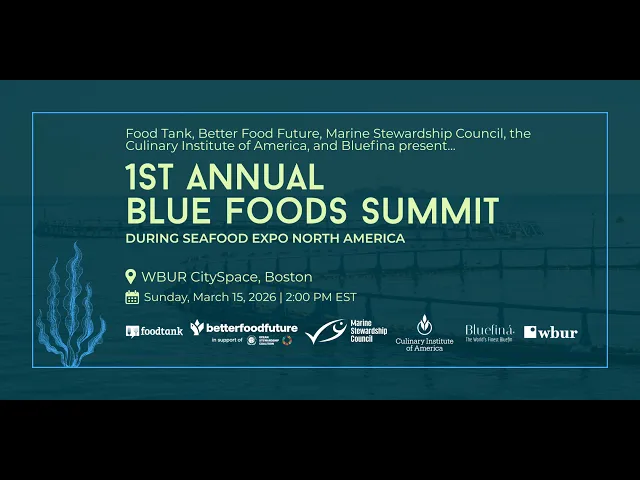
At this year’s inaugural Blue Food Summit during Seafood Expo North America (SENA), we had the opportunity to sit down with leaders across the seafood ecosystem to talk about one thing that continues to shape the future of the industry: traceability aligned with data standards.
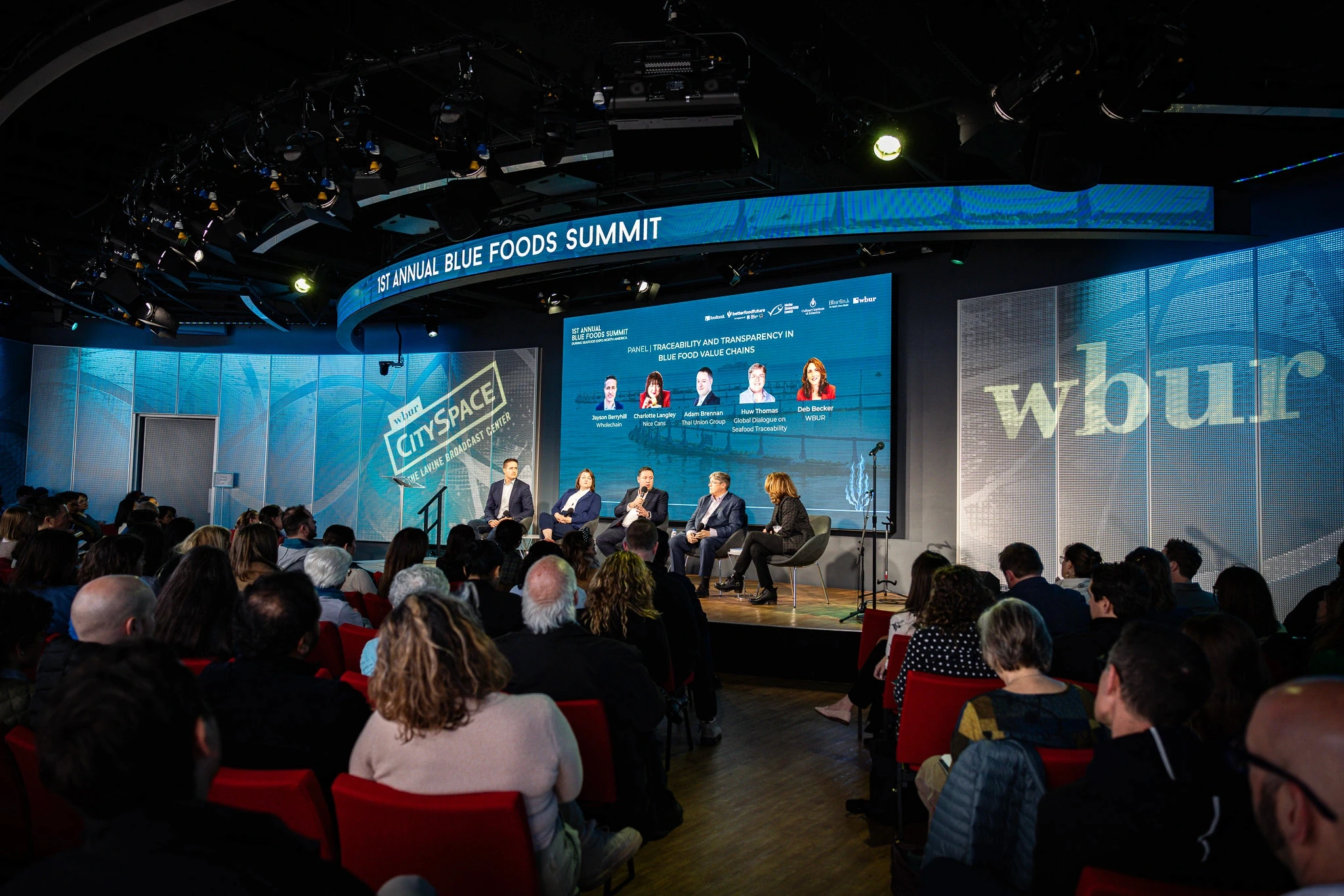
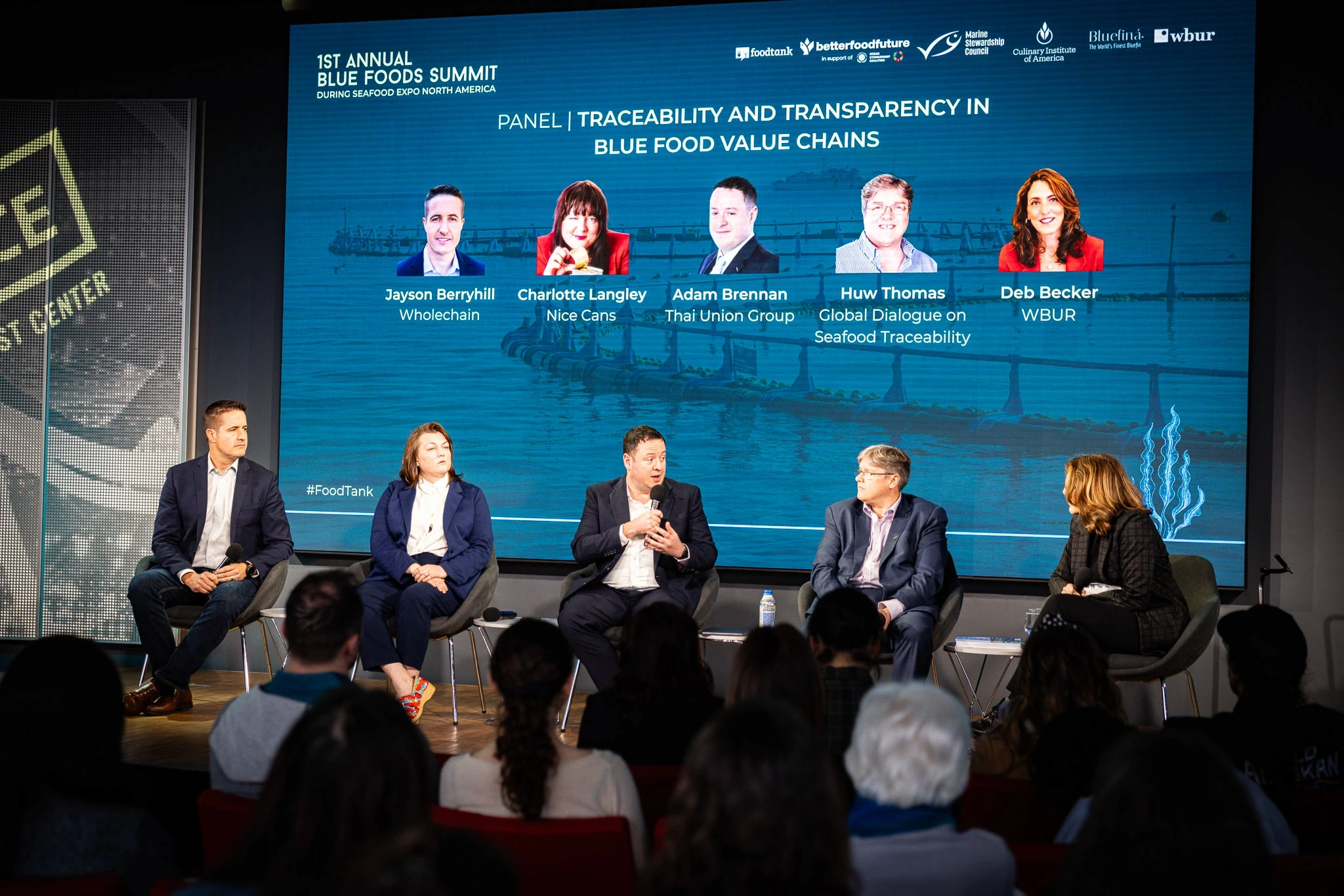
The panel brought together Huw Thomas (Global Dialogue on Seafood Traceability “GDST”), Adam Brennan (Thai Union Group), Charlotte Langley (Nice Cans), and Wholechain’s CEO, Jayson Berryhill (Wholechain), moderated by Deb Beck (WBUR). The conversation covered a wide range of perspectives, from global standards supported by large seafood distributors to on-the-ground realities for fishers and brands.
Across the discussion, a few themes kept coming up. And underneath all of them was a shared idea: standardization is what will make progress possible.
Skip to minute 52:00 for the traceability panel discussion.
A fragmented data landscape
If there was a clear starting point, it was this: the industry is still dealing with fragmented, disconnected data.
Jayson Berryhill of Wholechain described the current state of traceability as a mix of paper-based processes and systems that don’t talk to each other. Even where data is digitized, it often isn’t structured in a way that can be shared or understood across partners.
Huw Thomas from GDST reinforced this point. A lot of data already exists, but it’s not captured or exchanged consistently. Without a shared structure, interoperability remains out of reach.
That’s where standards come in. Not as an abstract goal, but as a practical way to make data usable across systems, companies, and borders.
Due diligence starts with knowing
Adam Brennan of Thai Union Group put it simply: “The gap is not intent. The gap is really on execution” .
Companies want to do the right thing. But without reliable, connected data, it’s difficult to move from intention to action.
Traceability, in this sense, is about turning “the unknown into the known,” which is Thai Union’s goal in implementing Wholechain’s system. It enables companies to understand where products come from, and that understanding is what makes due diligence possible. It also supports broader goals like protecting fisheries, improving ocean health, and ensuring accountability across the supply chain.
As Jayson noted during the discussion, even imperfect data has value. Having information to validate against is always better than having nothing at all.
Rethinking the cost of adoption
Cost is often raised as a barrier to traceability, and the panel didn’t shy away from it.
Huw pointed out that early adopters often carry higher costs, especially when the path forward isn’t fully defined. Time also plays a role. The faster change is required, the more expensive it becomes.
At the same time, Jayson brought up a clear counterpoint that standardization has a way of bringing costs down. He used a familiar analogy: Email works because it’s standardized. You don’t have to use the same provider as someone else to communicate with them. That shared structure creates flexibility and reduces cost across the board. “When was the last time you paid for email?” he asked.
The same principle applies to traceability systems: “What we’re going to see with more and more standardization of traceability is costs will go down. [Wholechain’s] cheapest plan now is free.”
There was also agreement that more data can actually drive efficiency. With better visibility, companies can optimize operations, reduce waste, and improve yields. Over time, those gains can offset the initial investment.
How regulation is shaping seafood traceability
Regulation came up as both a pressure and an enabler.
From Jayson’s perspective, policies like the FDA’s Food Safety Modernization Act Rule 204 have already helped move the industry forward. They create a baseline expectation and accelerate adoption.
Huw expanded on this, noting that governments are increasingly looking to standards like GDST to help them access and structure data. That data supports everything from fisheries management to supply chain risk and community resilience.
Adam added another layer. For companies like Thai Union, traceability is becoming part of the “license to operate.” Regulation helps level the playing field so that investments in sustainability and transparency aren’t carried by a few early movers alone.
Again, the speakers connected back to standardization. Regulations are far more effective when they align around shared frameworks rather than creating new, disconnected requirements.
Including small-scale suppliers in seafood traceability systems
One of the most important parts of the conversation focused on inclusion.
Huw emphasized that small-scale and first-mile suppliers cannot be left behind, noting that the transition to digital systems is a journey, not an overnight shift.
This is where standardization plays a different role. It’s not just about efficiency for large enterprises, rather it supports the creation of simple, accessible ways for everyone in the supply chain to participate.
If standards are too complex or too rigid, they risk excluding the very groups they are meant to support. If they are well designed, they can lower barriers and make participation more achievable over time.
Consumer demand for transparency in seafood supply chains
Charlotte Langley brought the consumer perspective into the conversation.
As a chef and founder, she’s seen the demand for transparency and sustainability grow. Consumers want to know where their food comes from, but they also want that information to be clear and actionable.
At the same time, price still matters. The challenge is not just to provide more information, but to help consumers understand the value behind it. Traceability enables the transparency that brands need to bring consumers into the fold, to understand who produced their food, and who brought it to their plates. They are curious about how much fishers get paid; traceability helps to assign value to each step in the supply chain.
Charlotte’s point went further, asking, “How do we get creative in finding solutions to readjust the value of that dollar?” Traceability can catalyze change in consumer behavior as well as improve the distribution of wealth across the supply chain, through improved efficiencies and a spotlight on the first-mile, which, as Charlotte pointed out, is often underestimated in its value for consumer storytelling.
That’s where storytelling, certification, and traceability built on standardized data all intersect. When information is consistent and credible, it becomes easier to communicate and easier for consumers to trust.
Why standardization is key to aligning seafood traceability by 2030
If there was a shared takeaway from the panel, it’s that progress is already happening, but it needs alignment.
The seafood industry has come a long way in digitization compared to other commodities. But to reach a clearer, more connected picture by 2030, as Huw suggested, the focus needs to be on bringing systems, stakeholders, and expectations together.
Standardization is the thread that runs through it all. It connects fragmented data, enables due diligence, reduces costs over time, supports regulation, includes small-scale suppliers, and helps translate complexity into something consumers can understand.
At this year’s inaugural Blue Food Summit during Seafood Expo North America (SENA), we had the opportunity to sit down with leaders across the seafood ecosystem to talk about one thing that continues to shape the future of the industry: traceability aligned with data standards.
The panel brought together Huw Thomas (Global Dialogue on Seafood Traceability “GDST”), Adam Brennan (Thai Union Group), Charlotte Langley (Nice Cans), and Wholechain’s CEO, Jayson Berryhill (Wholechain), moderated by Deb Beck (WBUR). The conversation covered a wide range of perspectives, from global standards supported by large seafood distributors to on-the-ground realities for fishers and brands.
Across the discussion, a few themes kept coming up. And underneath all of them was a shared idea: standardization is what will make progress possible.
Skip to minute 52:00 for the traceability panel discussion.
A fragmented data landscape
If there was a clear starting point, it was this: the industry is still dealing with fragmented, disconnected data.
Jayson Berryhill of Wholechain described the current state of traceability as a mix of paper-based processes and systems that don’t talk to each other. Even where data is digitized, it often isn’t structured in a way that can be shared or understood across partners.
Huw Thomas from GDST reinforced this point. A lot of data already exists, but it’s not captured or exchanged consistently. Without a shared structure, interoperability remains out of reach.
That’s where standards come in. Not as an abstract goal, but as a practical way to make data usable across systems, companies, and borders.
Due diligence starts with knowing
Adam Brennan of Thai Union Group put it simply: “The gap is not intent. The gap is really on execution” .
Companies want to do the right thing. But without reliable, connected data, it’s difficult to move from intention to action.
Traceability, in this sense, is about turning “the unknown into the known,” which is Thai Union’s goal in implementing Wholechain’s system. It enables companies to understand where products come from, and that understanding is what makes due diligence possible. It also supports broader goals like protecting fisheries, improving ocean health, and ensuring accountability across the supply chain.
As Jayson noted during the discussion, even imperfect data has value. Having information to validate against is always better than having nothing at all.
Rethinking the cost of adoption
Cost is often raised as a barrier to traceability, and the panel didn’t shy away from it.
Huw pointed out that early adopters often carry higher costs, especially when the path forward isn’t fully defined. Time also plays a role. The faster change is required, the more expensive it becomes.
At the same time, Jayson brought up a clear counterpoint that standardization has a way of bringing costs down. He used a familiar analogy: Email works because it’s standardized. You don’t have to use the same provider as someone else to communicate with them. That shared structure creates flexibility and reduces cost across the board. “When was the last time you paid for email?” he asked.
The same principle applies to traceability systems: “What we’re going to see with more and more standardization of traceability is costs will go down. [Wholechain’s] cheapest plan now is free.”
There was also agreement that more data can actually drive efficiency. With better visibility, companies can optimize operations, reduce waste, and improve yields. Over time, those gains can offset the initial investment.
How regulation is shaping seafood traceability
Regulation came up as both a pressure and an enabler.
From Jayson’s perspective, policies like the FDA’s Food Safety Modernization Act Rule 204 have already helped move the industry forward. They create a baseline expectation and accelerate adoption.
Huw expanded on this, noting that governments are increasingly looking to standards like GDST to help them access and structure data. That data supports everything from fisheries management to supply chain risk and community resilience.
Adam added another layer. For companies like Thai Union, traceability is becoming part of the “license to operate.” Regulation helps level the playing field so that investments in sustainability and transparency aren’t carried by a few early movers alone.
Again, the speakers connected back to standardization. Regulations are far more effective when they align around shared frameworks rather than creating new, disconnected requirements.
Including small-scale suppliers in seafood traceability systems
One of the most important parts of the conversation focused on inclusion.
Huw emphasized that small-scale and first-mile suppliers cannot be left behind, noting that the transition to digital systems is a journey, not an overnight shift.
This is where standardization plays a different role. It’s not just about efficiency for large enterprises, rather it supports the creation of simple, accessible ways for everyone in the supply chain to participate.
If standards are too complex or too rigid, they risk excluding the very groups they are meant to support. If they are well designed, they can lower barriers and make participation more achievable over time.
Consumer demand for transparency in seafood supply chains
Charlotte Langley brought the consumer perspective into the conversation.
As a chef and founder, she’s seen the demand for transparency and sustainability grow. Consumers want to know where their food comes from, but they also want that information to be clear and actionable.
At the same time, price still matters. The challenge is not just to provide more information, but to help consumers understand the value behind it. Traceability enables the transparency that brands need to bring consumers into the fold, to understand who produced their food, and who brought it to their plates. They are curious about how much fishers get paid; traceability helps to assign value to each step in the supply chain.
Charlotte’s point went further, asking, “How do we get creative in finding solutions to readjust the value of that dollar?” Traceability can catalyze change in consumer behavior as well as improve the distribution of wealth across the supply chain, through improved efficiencies and a spotlight on the first-mile, which, as Charlotte pointed out, is often underestimated in its value for consumer storytelling.
That’s where storytelling, certification, and traceability built on standardized data all intersect. When information is consistent and credible, it becomes easier to communicate and easier for consumers to trust.
Why standardization is key to aligning seafood traceability by 2030
If there was a shared takeaway from the panel, it’s that progress is already happening, but it needs alignment.
The seafood industry has come a long way in digitization compared to other commodities. But to reach a clearer, more connected picture by 2030, as Huw suggested, the focus needs to be on bringing systems, stakeholders, and expectations together.
Standardization is the thread that runs through it all. It connects fragmented data, enables due diligence, reduces costs over time, supports regulation, includes small-scale suppliers, and helps translate complexity into something consumers can understand.
At this year’s inaugural Blue Food Summit during Seafood Expo North America (SENA), we had the opportunity to sit down with leaders across the seafood ecosystem to talk about one thing that continues to shape the future of the industry: traceability aligned with data standards.
The panel brought together Huw Thomas (Global Dialogue on Seafood Traceability “GDST”), Adam Brennan (Thai Union Group), Charlotte Langley (Nice Cans), and Wholechain’s CEO, Jayson Berryhill (Wholechain), moderated by Deb Beck (WBUR). The conversation covered a wide range of perspectives, from global standards supported by large seafood distributors to on-the-ground realities for fishers and brands.
Across the discussion, a few themes kept coming up. And underneath all of them was a shared idea: standardization is what will make progress possible.
Skip to minute 52:00 for the traceability panel discussion.
A fragmented data landscape
If there was a clear starting point, it was this: the industry is still dealing with fragmented, disconnected data.
Jayson Berryhill of Wholechain described the current state of traceability as a mix of paper-based processes and systems that don’t talk to each other. Even where data is digitized, it often isn’t structured in a way that can be shared or understood across partners.
Huw Thomas from GDST reinforced this point. A lot of data already exists, but it’s not captured or exchanged consistently. Without a shared structure, interoperability remains out of reach.
That’s where standards come in. Not as an abstract goal, but as a practical way to make data usable across systems, companies, and borders.
Due diligence starts with knowing
Adam Brennan of Thai Union Group put it simply: “The gap is not intent. The gap is really on execution” .
Companies want to do the right thing. But without reliable, connected data, it’s difficult to move from intention to action.
Traceability, in this sense, is about turning “the unknown into the known,” which is Thai Union’s goal in implementing Wholechain’s system. It enables companies to understand where products come from, and that understanding is what makes due diligence possible. It also supports broader goals like protecting fisheries, improving ocean health, and ensuring accountability across the supply chain.
As Jayson noted during the discussion, even imperfect data has value. Having information to validate against is always better than having nothing at all.
Rethinking the cost of adoption
Cost is often raised as a barrier to traceability, and the panel didn’t shy away from it.
Huw pointed out that early adopters often carry higher costs, especially when the path forward isn’t fully defined. Time also plays a role. The faster change is required, the more expensive it becomes.
At the same time, Jayson brought up a clear counterpoint that standardization has a way of bringing costs down. He used a familiar analogy: Email works because it’s standardized. You don’t have to use the same provider as someone else to communicate with them. That shared structure creates flexibility and reduces cost across the board. “When was the last time you paid for email?” he asked.
The same principle applies to traceability systems: “What we’re going to see with more and more standardization of traceability is costs will go down. [Wholechain’s] cheapest plan now is free.”
There was also agreement that more data can actually drive efficiency. With better visibility, companies can optimize operations, reduce waste, and improve yields. Over time, those gains can offset the initial investment.
How regulation is shaping seafood traceability
Regulation came up as both a pressure and an enabler.
From Jayson’s perspective, policies like the FDA’s Food Safety Modernization Act Rule 204 have already helped move the industry forward. They create a baseline expectation and accelerate adoption.
Huw expanded on this, noting that governments are increasingly looking to standards like GDST to help them access and structure data. That data supports everything from fisheries management to supply chain risk and community resilience.
Adam added another layer. For companies like Thai Union, traceability is becoming part of the “license to operate.” Regulation helps level the playing field so that investments in sustainability and transparency aren’t carried by a few early movers alone.
Again, the speakers connected back to standardization. Regulations are far more effective when they align around shared frameworks rather than creating new, disconnected requirements.
Including small-scale suppliers in seafood traceability systems
One of the most important parts of the conversation focused on inclusion.
Huw emphasized that small-scale and first-mile suppliers cannot be left behind, noting that the transition to digital systems is a journey, not an overnight shift.
This is where standardization plays a different role. It’s not just about efficiency for large enterprises, rather it supports the creation of simple, accessible ways for everyone in the supply chain to participate.
If standards are too complex or too rigid, they risk excluding the very groups they are meant to support. If they are well designed, they can lower barriers and make participation more achievable over time.
Consumer demand for transparency in seafood supply chains
Charlotte Langley brought the consumer perspective into the conversation.
As a chef and founder, she’s seen the demand for transparency and sustainability grow. Consumers want to know where their food comes from, but they also want that information to be clear and actionable.
At the same time, price still matters. The challenge is not just to provide more information, but to help consumers understand the value behind it. Traceability enables the transparency that brands need to bring consumers into the fold, to understand who produced their food, and who brought it to their plates. They are curious about how much fishers get paid; traceability helps to assign value to each step in the supply chain.
Charlotte’s point went further, asking, “How do we get creative in finding solutions to readjust the value of that dollar?” Traceability can catalyze change in consumer behavior as well as improve the distribution of wealth across the supply chain, through improved efficiencies and a spotlight on the first-mile, which, as Charlotte pointed out, is often underestimated in its value for consumer storytelling.
That’s where storytelling, certification, and traceability built on standardized data all intersect. When information is consistent and credible, it becomes easier to communicate and easier for consumers to trust.
Why standardization is key to aligning seafood traceability by 2030
If there was a shared takeaway from the panel, it’s that progress is already happening, but it needs alignment.
The seafood industry has come a long way in digitization compared to other commodities. But to reach a clearer, more connected picture by 2030, as Huw suggested, the focus needs to be on bringing systems, stakeholders, and expectations together.
Standardization is the thread that runs through it all. It connects fragmented data, enables due diligence, reduces costs over time, supports regulation, includes small-scale suppliers, and helps translate complexity into something consumers can understand.
Claudia Sandell-Gándara
Want to get started on traceability?
Want to get started on traceability?
Want to get started on traceability?
Explore how traceability works and take your first step in getting started,
simply click the link below.
Explore how traceability works and take your first step in getting started,
simply click the link below.