
African Leaders are Moving Blue Food Systems from Talk to Action
African Leaders are Moving Blue Food Systems from Talk to Action
African Leaders are Moving Blue Food Systems from Talk to Action

Written By:
Warren Manuel
Warren Manuel
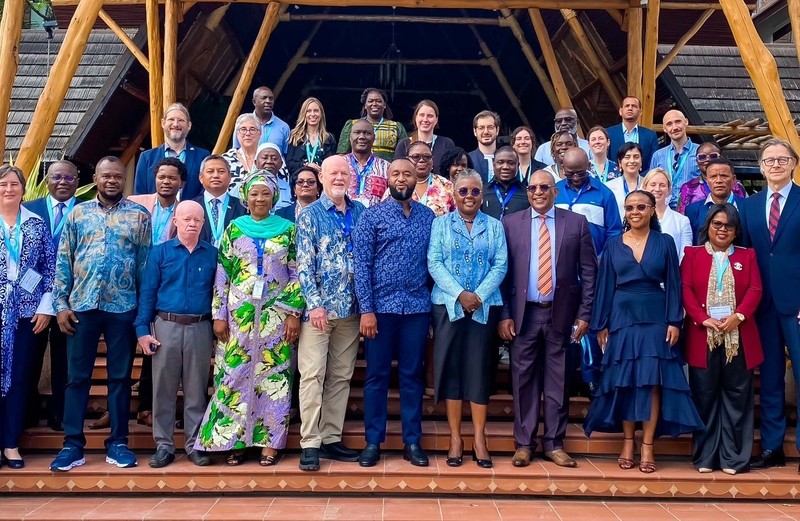
The 11th Our Ocean Conference in Mombasa, Kenya, marked an important milestone: the first time this global gathering was hosted on African soil. While the conference wrapped up in mid-June, the real work and the ongoing momentum is just beginning.
For those of us tracking the global food transition, the most significant breakthrough wasn’t the high-level dialogue itself. It was the commitment by African leaders to move past broad statements and focus on execution.
On the margins of the conference, the High-Level African Blue Food Leadership Roundtable culminated in a call to establish the African Network of Blue Food Champions.
As partners of the Aquatic Blue Food Coalition, Wholechain and Better Food Future want to congratulate the African Union Development Agency (AUDA-NEPAD), the Government of Iceland, the World Resources Institute (WRI), and the ministers from Kenya, Ghana, Madagascar, Namibia, and Sierra Leone who forged this alliance.
Here is why this network matters for global food systems, and how we got a tiny piece of traceability on the dinner table to show what's possible.
Concrete Targets Over Broad Promises
While international climate and food summits can sometimes feel heavy on declarations and light on next steps, the African Network of Blue Food Champions is starting with clear, practical priorities.
The roundtable set out three key goals:
Reducing Post-Harvest Loss: Scaling technical interventions to cut post-harvest fish value-chain losses from a steep 40% down to 10%.
Integrating through NDCs: Using guidelines to formally integrate fisheries, aquaculture, and blue carbon habitats into updated national climate plans (Nationally Determined Contributions).
Preparing for COP32: Developing a synchronized, finance-ready African blue foods investment package to present at the upcoming COP32 in Ethiopia.
True food security and climate resilience require exactly this kind of localized, institutional leadership.
Traceability on the Menu
Policy frameworks are essential, but the transition to sustainable blue food systems eventually has to make sense on a plate.
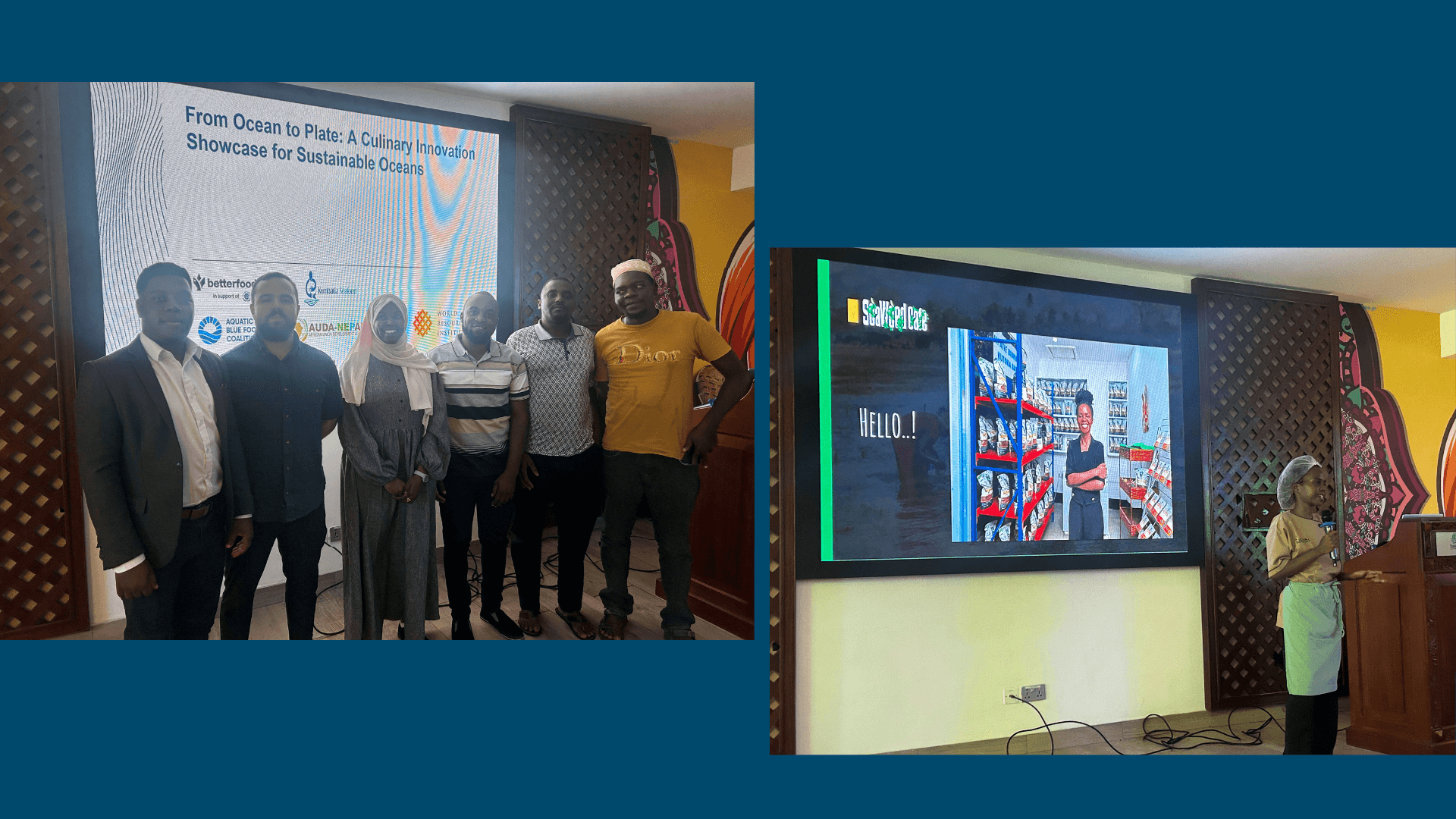
On the eve of the conference, the Aquatic Blue Food Coalition, AUDA-NEPAD, and WRI hosted a culinary showcase: "From Ocean to Plate." The dinner brought together policymakers, chefs, and innovators to highlight the direct link between consumption patterns and ocean sustainability.
Even though our teams couldn't make it to Mombasa in person this time around, we still wanted to support the event by providing a tangible example of transparency in action.
Attendees who sat down to enjoy the featured Mahi Mahi found Wholechain QR codes printed directly on the menu. With a quick scan, guests could see the entire traceable journey of the fish before taking their first bite.
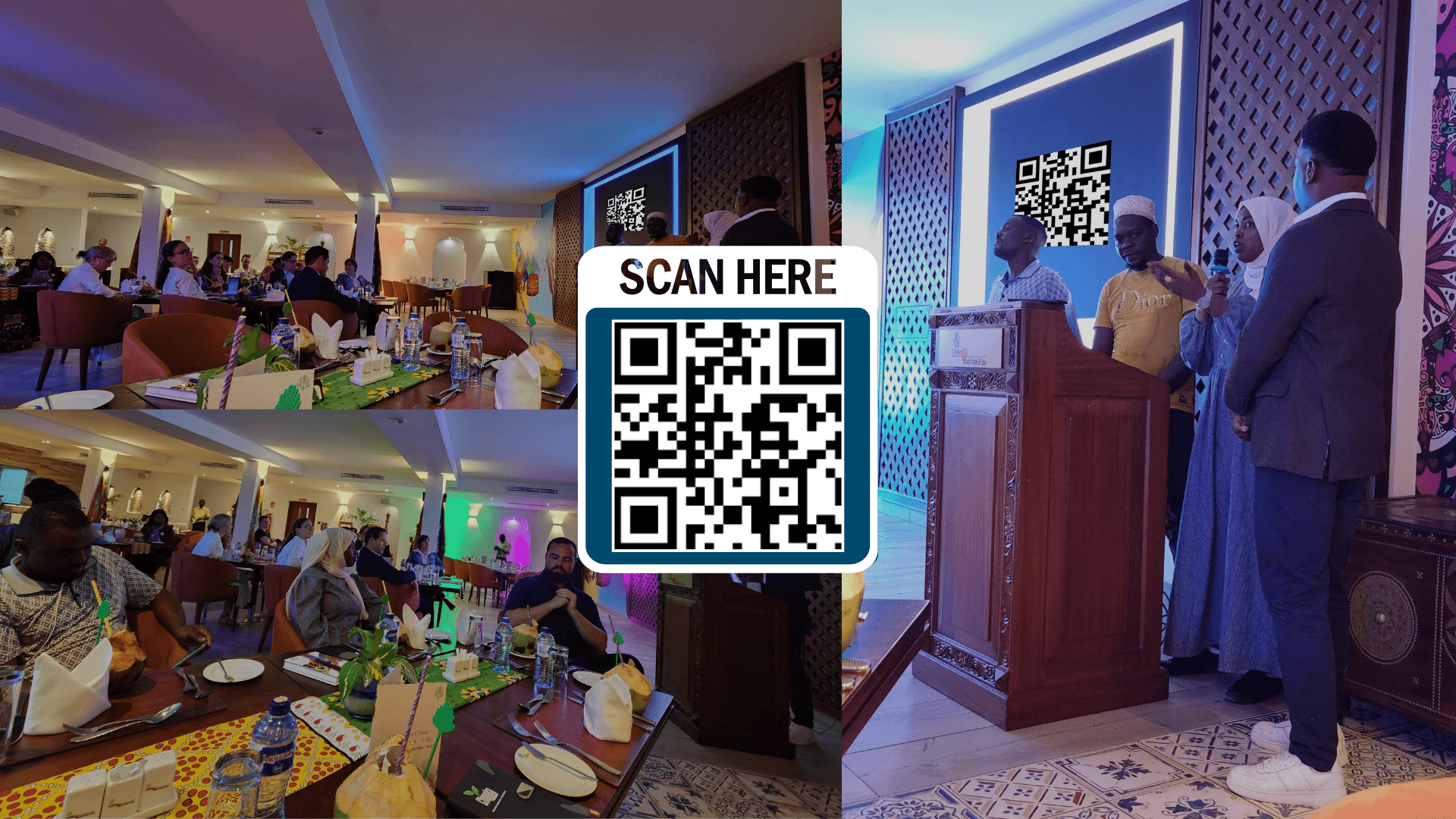
Why does this matter? Because transparency shouldn't feel like an abstract supply chain concept. When a diner or a government minister can trace their seafood back to its source, the value of sustainable fisheries management becomes immediate and real.
Supporting the True Champions
At Wholechain and Better Food Future, our role is simply to build the digital infrastructure that makes sustainable supply chains visible. The heavy lifting is being done by the coastal communities, local fishers, and national leaders driving these reforms on the ground.
We are proud to support the Aquatic Blue Food Coalition and the newly formed African Network of Blue Food Champions. As they build toward upcoming COP events (31 and 32), they are showing the rest of the world what practical, climate-resilient food policy looks like.
Congratulations to all the organizers, participants, and culinary teams who made OOC11 a success. The roadmap is set, and we are looking forward to supporting the journey ahead.
The 11th Our Ocean Conference in Mombasa, Kenya, marked an important milestone: the first time this global gathering was hosted on African soil. While the conference wrapped up in mid-June, the real work and the ongoing momentum is just beginning.
For those of us tracking the global food transition, the most significant breakthrough wasn’t the high-level dialogue itself. It was the commitment by African leaders to move past broad statements and focus on execution.
On the margins of the conference, the High-Level African Blue Food Leadership Roundtable culminated in a call to establish the African Network of Blue Food Champions.
As partners of the Aquatic Blue Food Coalition, Wholechain and Better Food Future want to congratulate the African Union Development Agency (AUDA-NEPAD), the Government of Iceland, the World Resources Institute (WRI), and the ministers from Kenya, Ghana, Madagascar, Namibia, and Sierra Leone who forged this alliance.
Here is why this network matters for global food systems, and how we got a tiny piece of traceability on the dinner table to show what's possible.
Concrete Targets Over Broad Promises
While international climate and food summits can sometimes feel heavy on declarations and light on next steps, the African Network of Blue Food Champions is starting with clear, practical priorities.
The roundtable set out three key goals:
Reducing Post-Harvest Loss: Scaling technical interventions to cut post-harvest fish value-chain losses from a steep 40% down to 10%.
Integrating through NDCs: Using guidelines to formally integrate fisheries, aquaculture, and blue carbon habitats into updated national climate plans (Nationally Determined Contributions).
Preparing for COP32: Developing a synchronized, finance-ready African blue foods investment package to present at the upcoming COP32 in Ethiopia.
True food security and climate resilience require exactly this kind of localized, institutional leadership.
Traceability on the Menu
Policy frameworks are essential, but the transition to sustainable blue food systems eventually has to make sense on a plate.
On the eve of the conference, the Aquatic Blue Food Coalition, AUDA-NEPAD, and WRI hosted a culinary showcase: "From Ocean to Plate." The dinner brought together policymakers, chefs, and innovators to highlight the direct link between consumption patterns and ocean sustainability.
Even though our teams couldn't make it to Mombasa in person this time around, we still wanted to support the event by providing a tangible example of transparency in action.
Attendees who sat down to enjoy the featured Mahi Mahi found Wholechain QR codes printed directly on the menu. With a quick scan, guests could see the entire traceable journey of the fish before taking their first bite.
Why does this matter? Because transparency shouldn't feel like an abstract supply chain concept. When a diner or a government minister can trace their seafood back to its source, the value of sustainable fisheries management becomes immediate and real.
Supporting the True Champions
At Wholechain and Better Food Future, our role is simply to build the digital infrastructure that makes sustainable supply chains visible. The heavy lifting is being done by the coastal communities, local fishers, and national leaders driving these reforms on the ground.
We are proud to support the Aquatic Blue Food Coalition and the newly formed African Network of Blue Food Champions. As they build toward upcoming COP events (31 and 32), they are showing the rest of the world what practical, climate-resilient food policy looks like.
Congratulations to all the organizers, participants, and culinary teams who made OOC11 a success. The roadmap is set, and we are looking forward to supporting the journey ahead.
The 11th Our Ocean Conference in Mombasa, Kenya, marked an important milestone: the first time this global gathering was hosted on African soil. While the conference wrapped up in mid-June, the real work and the ongoing momentum is just beginning.
For those of us tracking the global food transition, the most significant breakthrough wasn’t the high-level dialogue itself. It was the commitment by African leaders to move past broad statements and focus on execution.
On the margins of the conference, the High-Level African Blue Food Leadership Roundtable culminated in a call to establish the African Network of Blue Food Champions.
As partners of the Aquatic Blue Food Coalition, Wholechain and Better Food Future want to congratulate the African Union Development Agency (AUDA-NEPAD), the Government of Iceland, the World Resources Institute (WRI), and the ministers from Kenya, Ghana, Madagascar, Namibia, and Sierra Leone who forged this alliance.
Here is why this network matters for global food systems, and how we got a tiny piece of traceability on the dinner table to show what's possible.
Concrete Targets Over Broad Promises
While international climate and food summits can sometimes feel heavy on declarations and light on next steps, the African Network of Blue Food Champions is starting with clear, practical priorities.
The roundtable set out three key goals:
Reducing Post-Harvest Loss: Scaling technical interventions to cut post-harvest fish value-chain losses from a steep 40% down to 10%.
Integrating through NDCs: Using guidelines to formally integrate fisheries, aquaculture, and blue carbon habitats into updated national climate plans (Nationally Determined Contributions).
Preparing for COP32: Developing a synchronized, finance-ready African blue foods investment package to present at the upcoming COP32 in Ethiopia.
True food security and climate resilience require exactly this kind of localized, institutional leadership.
Traceability on the Menu
Policy frameworks are essential, but the transition to sustainable blue food systems eventually has to make sense on a plate.
On the eve of the conference, the Aquatic Blue Food Coalition, AUDA-NEPAD, and WRI hosted a culinary showcase: "From Ocean to Plate." The dinner brought together policymakers, chefs, and innovators to highlight the direct link between consumption patterns and ocean sustainability.
Even though our teams couldn't make it to Mombasa in person this time around, we still wanted to support the event by providing a tangible example of transparency in action.
Attendees who sat down to enjoy the featured Mahi Mahi found Wholechain QR codes printed directly on the menu. With a quick scan, guests could see the entire traceable journey of the fish before taking their first bite.
Why does this matter? Because transparency shouldn't feel like an abstract supply chain concept. When a diner or a government minister can trace their seafood back to its source, the value of sustainable fisheries management becomes immediate and real.
Supporting the True Champions
At Wholechain and Better Food Future, our role is simply to build the digital infrastructure that makes sustainable supply chains visible. The heavy lifting is being done by the coastal communities, local fishers, and national leaders driving these reforms on the ground.
We are proud to support the Aquatic Blue Food Coalition and the newly formed African Network of Blue Food Champions. As they build toward upcoming COP events (31 and 32), they are showing the rest of the world what practical, climate-resilient food policy looks like.
Congratulations to all the organizers, participants, and culinary teams who made OOC11 a success. The roadmap is set, and we are looking forward to supporting the journey ahead.
Warren Manuel
Want to get started on traceability?
Want to get started on traceability?
Want to get started on traceability?
Explore how traceability works and take your first step in getting started,
simply click the link below.
Explore how traceability works and take your first step in getting started,
simply click the link below.